Critical & Timeless – Gold underpins defence, electronics and aerospace, while remaining the world’s most trusted store of value
Record Demand – Central banks have bought over 1,000 tonnes every year since 2022, driving gold to an all-time high near US$5,590/oz in January 2026
Australia’s Position – As a top-three global producer, Australia and it’s gold producers are well placed to supply rising demand from a stable jurisdiction
What is Gold?
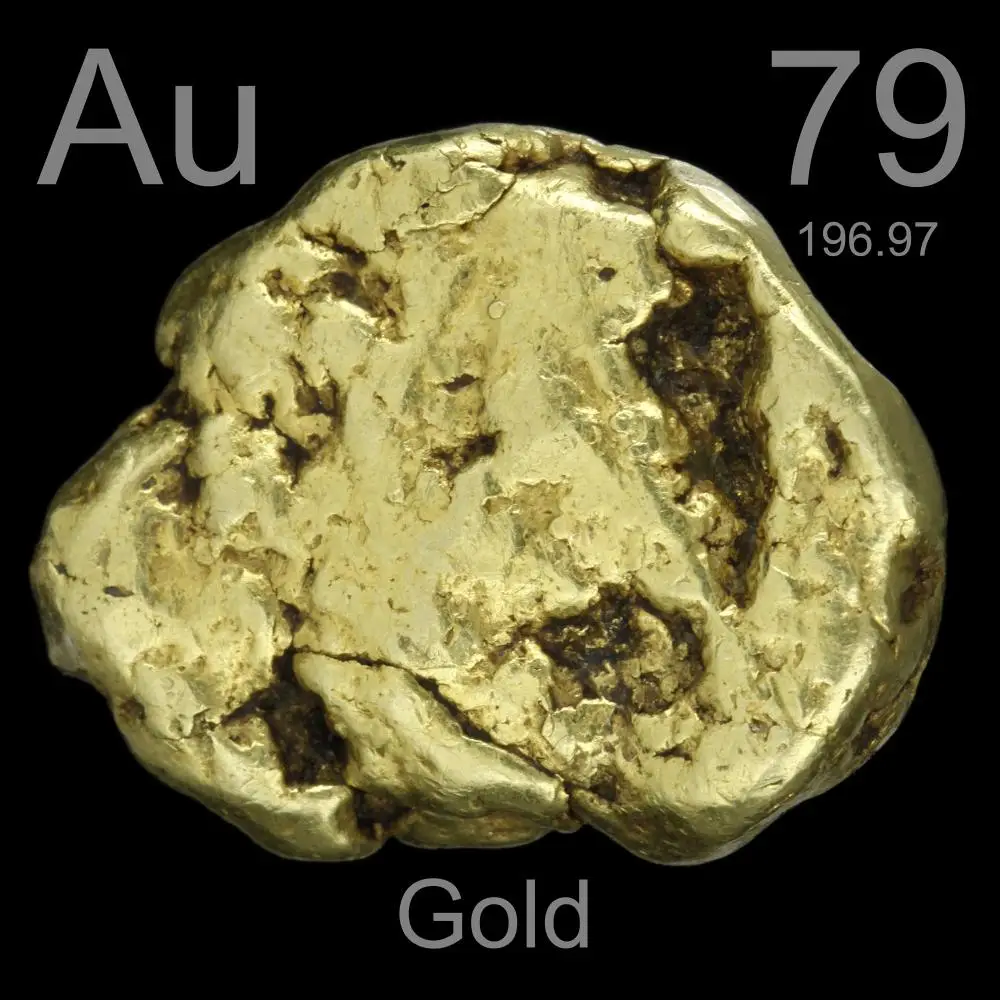
Gold is a dense, soft, malleable metal famous for its yellow colour and brilliance, but its value extends far beyond its looks. Gold is extraordinarily malleable, an excellent electrical conductor, highly resistant to corrosion, and remarkably stable under extreme conditions, including irradiation. Those properties make it a good way to store value and a key component of defence, aerospace, telecommunications, energy, medical, and electronic infrastructure.
Humans have always prized gold, with the earliest worked gold artefacts — including the famous treasures of the Varna Necropolis in Bulgaria — dating back to roughly 4,500 BCE. Early civilisations shaped gold into beads, jewellery, adornments, religious icons, and coins. Its value stemmed from its scarcity, beauty, resistance to tarnish, and malleability, which made it easy to shape. The reverence for gold carried symbolic, almost mystical weight — and that reverence persists to this day.
More Than a Shiny Object
But gold has always had a practical side. Etruscan goldsmiths used it in dental prosthetics — gold bands and wire to secure replacement teeth — as early as the 7th century BCE. Pre-industrial societies also used gold for corrosion-resistant gilding and for early optical applications. For example the Romans embedded minute quantities of gold and silver as nanoparticles in glass to create remarkable effects, famously preserved in the Lycurgus Cup, which shifts from green to red depending on how light passes through it.
However, the Industrial Revolution and the electronic age that followed have transformed gold from an adornment into a critical mineral. Because gold conducts electricity reliably and, unlike copper and silver, does not tarnish or corrode, it became the material of choice for precision switch contacts, relays and connectors. Today, gold is essential in microchips, circuit boards and connectors, where its reliability and signal integrity make it indispensable in smartphones, computers, data centres, aerospace systems and defence electronics.
Lycurgus Cup: A Piece of Ancient Roman Nanotechnology
Geopolitical Chess
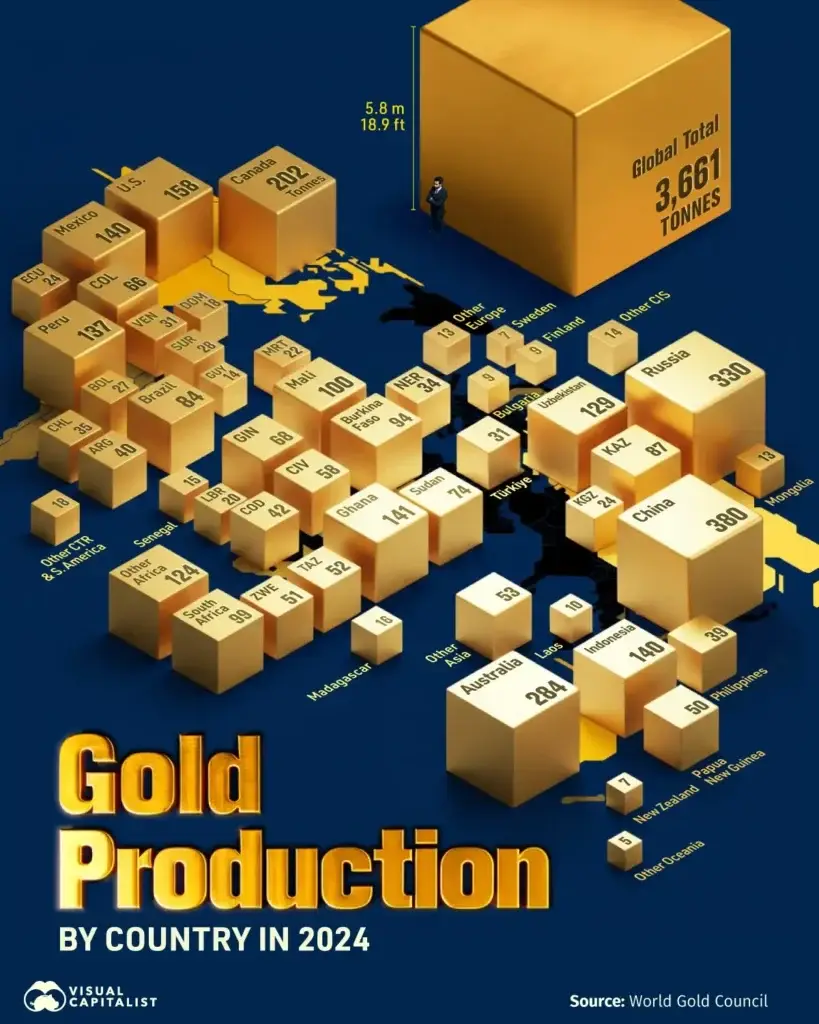
According to the World Gold Council, global gold mine production reached around 3,660 tonnes in 2024 — a new record.
China leads production at roughly 10–11% of the global total, followed by Russia, Australia and Canada.
The United States produces around 5%, and other significant contributors include Ghana, Mexico, Indonesia, Peru and Uzbekistan. South Africa, once the world’s dominant producer, now sits outside the top ten — a reminder that gold production geography shifts over generations, and that secure, long-life jurisdictions matter.
Those international supply lines carry weighty implications for the global gold supply chain. To reduce its dependence on foreign gold, the United States is actively working to onshore its production — investing in new exploration, expanding refining capacity, and streamlining permitting.
A Lifeboat in a Sea of Uncertainty
Despite its many technological uses, one of gold’s primary roles remains storing value. Gold is precious because it is gold: scarce, beautiful, nearly mystical. Unlike real estate or bulk commodities such as iron ore, gold is highly portable; it packs immense value into small quantities. Logistically, moving gold is far simpler than moving bulk commodities. Wherever you are in the world, if you have gold, you have money.
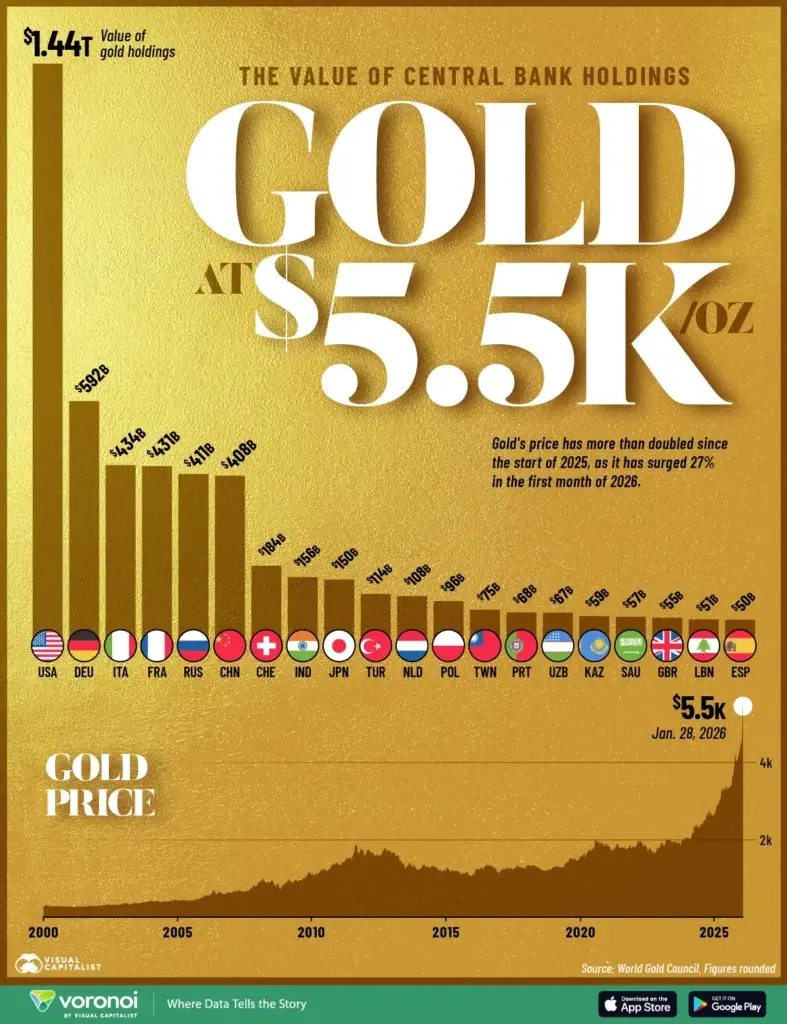
This intrinsic value also makes it a core instrument of monetary policy. Central banks use gold reserves to hedge against inflation, guard against currency debasement, and build trust in their monetary systems. As global volatility has risen, so has their investment in gold, with Central Banks purchasing a record 1,082 tonnes of gold in 2022 and, according to the World Gold Council, they continued to buy more than 1,000 tonnes annually through 2023 and 2024.
Source: Visual Capitalist
When uncertainty rules, the world turns to gold.
Goldman Sachs Research commodities strategist Lina Thomas on what’s driving the gold rally — and why the structural case for further gains remains intact, even after successive record highs.
Source: Goldman Sachs Research
Because of its historical reliability as currency, gold acts as a hedge in times of geopolitical instability. On 28 January 2026, gold set an all-time high of just under US$5,590 per ounce, buoyed by conflicts in the Middle East and Europe and by shifting alliances across Asia and the Americas.
But the world’s leading commodities analysts believe the rally still has room to run. Goldman Sachs, J.P. Morgan and Bank of America have all set 2026 price targets at or above US$5,000 per ounce — underpinned by three structural forces: sustained central bank accumulation, accelerating ETF inflows, and what Goldman Sachs calls the “debasement trade,” driven by eroding confidence in fiat reserve assets.
Why iTech Minerals?
iTech Minerals (ASX: ITM) is advancing the Reynolds Range Gold Antimony Lithium Project in the Northern Territory — a large, prospective tenement package in a first-world jurisdiction, offering exposure to gold at a time when central banks, industrial users and investors are all competing for reliable supply outside the dominant producing nations.