Preparing for Soil Sampling at The Reynolds Range Project
With the exploration season fast approaching at the Reynolds Range Gold Antimony Project, the iTech Team has been on the ground at its field base in Ti Tree, Northern Territory, getting ready for the upcoming soil sampling program.
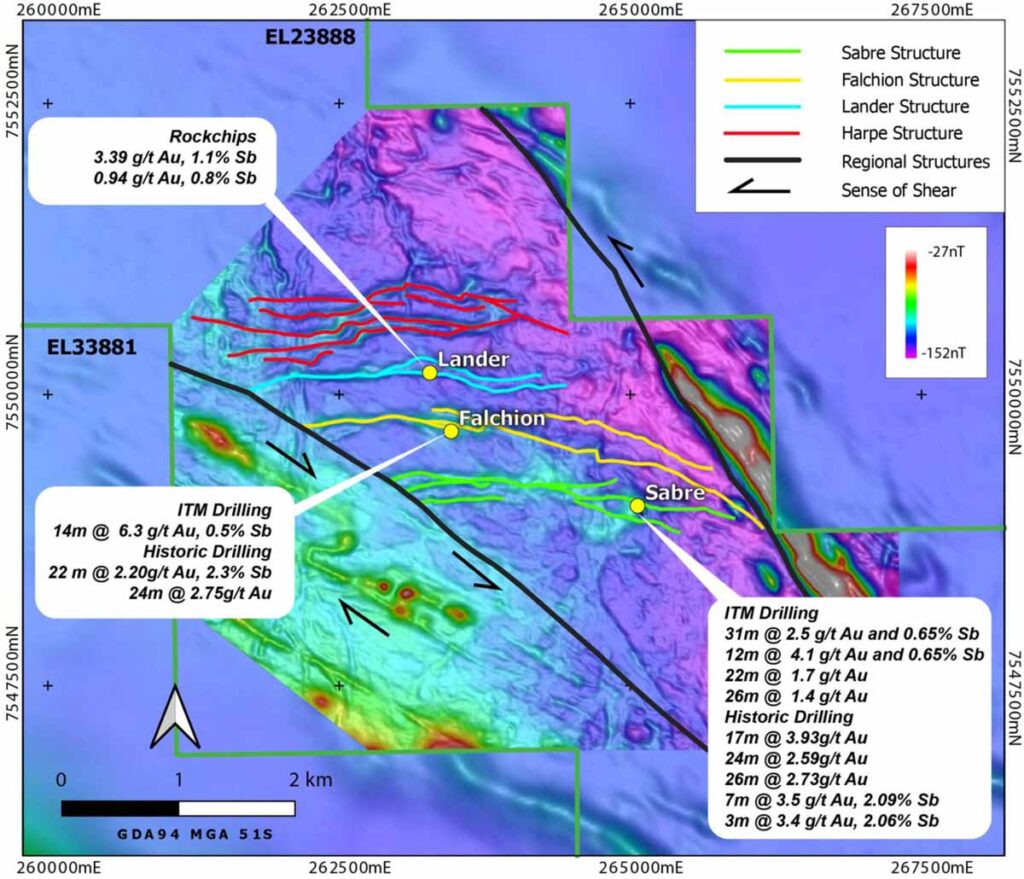
With new detailed magnetic survey data highlighting the key east-west structures that control mineralisation, the team aims to use soil sampling to refine drill targeting to key zones along the structures.
However, a major challenge for this drill targeting process is the quality of the historical soil sampling results. Many previous explorers only dug down 10–30cm into transported soils, which are materials washed in by creeks and river systems. This has led to inconsistent data and limited insights into what lies beneath the surface.
To remedy this, the ITM team has built a custom electric auger drill mounted on an all-terrain buggy, capable of drilling down to 1.5 metres. Paired with a portable XRF analyser, this setup allows the team to quickly sample large areas and detect arsenic, antimony, and bismuth readings, key indicators of gold and antimony mineralisation, and all in real time.
Watch MD Mike Schwarz demonstrate the new equipment in the video above.
The system’s power lies in its ability to use that information in the field to tighten sample spacing from the traditional 100-metre intervals to 10–20 metres across the most highly prospective areas.
New 25m ultra-detailed magnetics over historical 100m magnetics with structural interpretation and gold-antimony prospects (Historical drill results and rock chip data from, ASX: ITM 19 August 2025).
WANT TO GET INVESTOR UPDATES DELIVERED TO YOUR INBOX?